Chinook salmon
Oncorhynchus tshawytscha
The largest Pacific salmon, also called king or spring salmon, and quinnat in New Zealand.
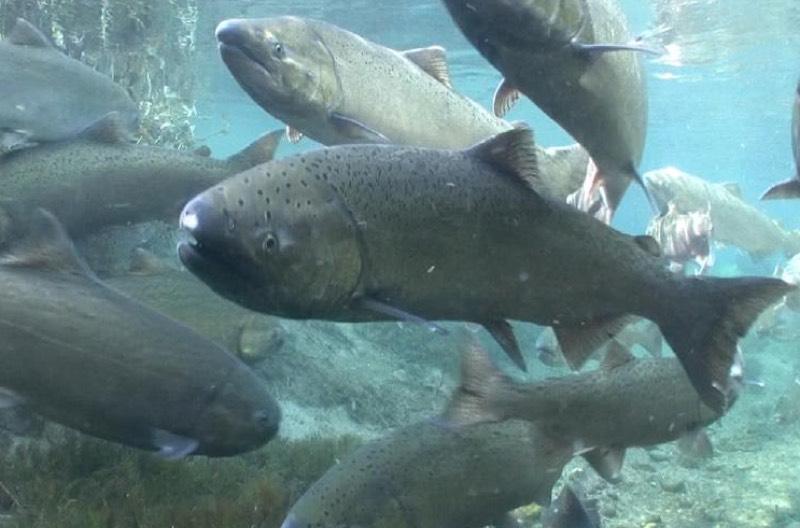
Photo: Michael Humling, U.S. Fish & Wildlife Service (public domain), via Wikimedia Commons

How to identify it
- Black gums at the base of the teeth, and a black mouth.
- Spots on the back and on both lobes of the tail.
- Silvery sides with a broad tail base.
- Thirteen or more rays in the anal fin.
Fish it's mistaken for
Coho salmon
White or grey gums, and spots only on the upper lobe of the tail.
Rainbow trout
White mouth and 12 or fewer anal fin rays.
Atlantic salmon
Few, often X-shaped spots, mostly above the midline, and a white mouth.
Chinook salmon seasons and limits
Open dates and catch limits by zone, from each region's official regulations.
Written for FishCompass from general fish identification knowledge. When you can't tell for sure, treat the fish as the species with the stricter rule.
The guide works offline in the app
Open the fish ID guide on the water, with no signal, and log the catch straight from it.